
Delhi School Admissions 2026-27: Directorate of Education Releases Nursery Admission Points Criteria in Delhi

The Directorate of Education (DoE), Delhi, has released the updated nursery admission guidelines for private unaided schools for the 2026–27 academic session. The new notification outlines the points system, age criteria, important dates, and transparency measures that schools must follow during the admission cycle. These updates are intended to make the process smoother, more transparent, and parent-friendly.

Key Admission Dates for Nursery, KG & Class 1

Parents applying for entry-level classes in Delhi should keep the following dates in mind:

  • Admission forms will be available from 4 December 2025.

  • Schools must publish their admission criteria and points system by 28 November 2025.

  • The list of all applicants must be uploaded by 9 January 2026.

  • Points awarded to each applicant must be displayed by 16 January 2026.

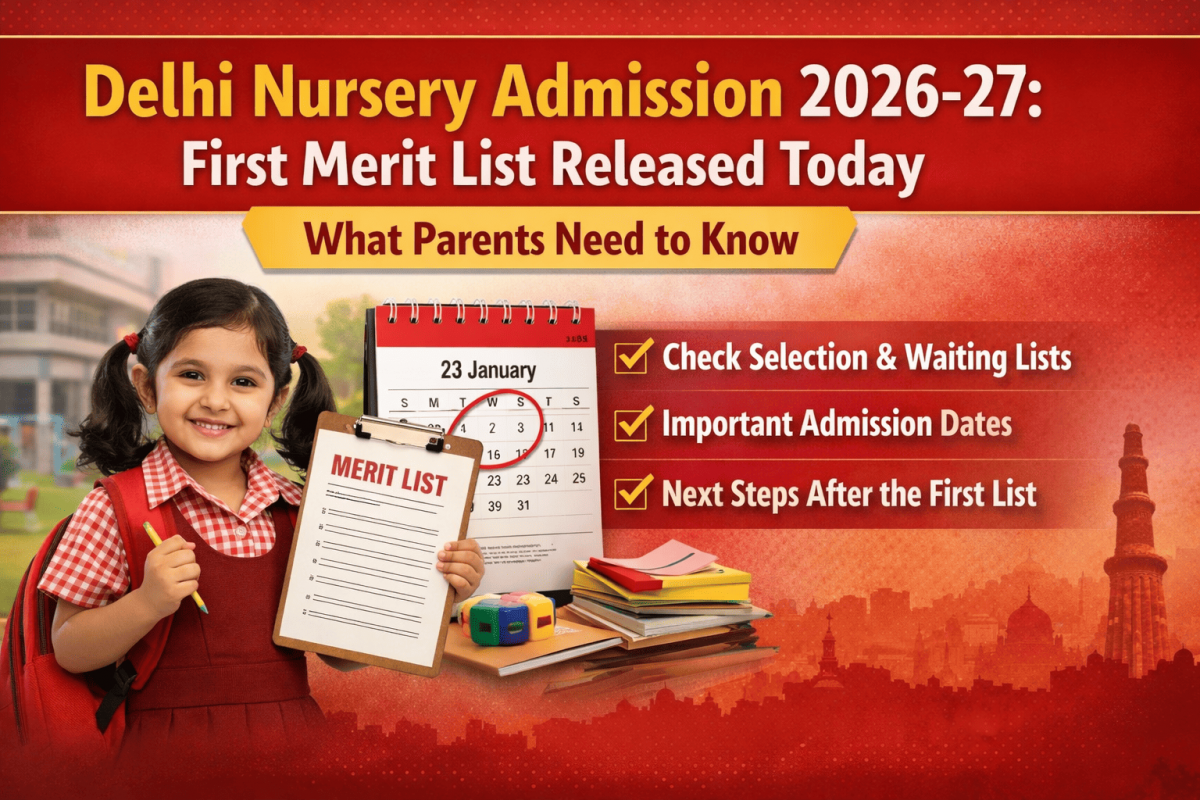
  • First list of selected students will be released on 23 January 2026.

  • Second list will be out on 9 February 2026.

  • Parents may raise queries regarding points between 24 January and 3 February 2026.

  • The entire admission process must be completed by 19 March 2026.

These dates help ensure uniformity across all private unaided schools in Delhi.

Age Criteria for Nursery, KG, and Class 1

In alignment with the National Education Policy (NEP) 2020, the DoE has standardised age limits for entry-level classes:

  • Nursery: Minimum 3 years old as of 31 March 2026

  • KG: Minimum 4 years old as of 31 March 2026

  • Class 1: Minimum 5 years old as of 31 March 2026

Schools also have the option to allow up to one month of age relaxation, depending on the decision of the school head.

The Points System: How Schools Allocate Seats

Delhi private schools follow a point-based system to ensure fairness in admission to open seats (non-EWS and non-DG categories). While schools may decide their own criteria, the most common and widely accepted parameters include:

1. Neighbourhood (Proximity to School)

Children residing closer to the school generally receive higher points, making distance a major deciding factor.

2. Sibling Studying in the Same School

If an older sibling is already enrolled, applicants usually receive priority under the sibling category.

3. Alumni Status

Schools often grant points if one or both parents are alumni of the institution.

4. Staff Ward Category

Children of teaching and non-teaching staff may receive additional points, depending on the school’s criteria.

5. First-Born Child or Other School-Specific Criteria

Some schools include additional parameters to further differentiate applicants, provided they are approved by the DoE and not previously disallowed by authorities.

Transparency Measures and Regulations

To ensure fairness and prevent misuse, the DoE has instructed schools to follow strict transparency guidelines:

  • Schools must upload complete admission criteria and points allocation on their websites.

  • A non-refundable registration fee cannot exceed ₹25.

  • Schools are prohibited from charging capitation fees or forcing parents to buy prospectuses.

  • Any draw of lots must be conducted in the presence of parents and video recorded.

  • Schools are barred from using any criteria previously rejected by the government or courts.

These measures help maintain a fair and accountable admission process across the city.

How Parents Should Prepare

Here are some essential steps to help parents navigate the admission cycle smoothly:

  • Check proximity: Distance from home to school significantly influences point allocation.

  • Organize documents: Keep birth certificate, address proof, and sibling/alumni documents ready.

  • Verify age eligibility: Ensure your child meets the required age limit as of 31 March 2026.

  • Track school updates: Schools will publish criteria and applicant lists on specific deadlines.

  • Apply early: Forms become available in December, and applying on time reduces last-minute stress.

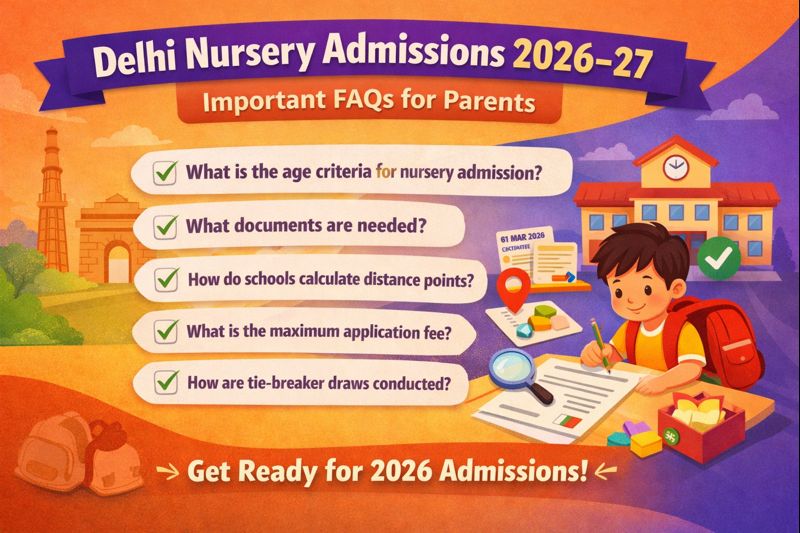
FAQs: Delhi Nursery Admission Points Criteria 2026–27

1. What has the Directorate of Education (DoE) announced for Nursery admissions?

The DoE has released updated guidelines and a point-based criteria system for Nursery, KG, and Class 1 admissions in Delhi’s private unaided schools for the 2026–27 academic session. The notification includes age limits, admission timelines, and transparency rules that all schools must follow.

2. When does the admission process for Nursery 2026–27 begin?

Admission forms will be available starting 4 December 2025. Schools must publish their full criteria and points system by 28 November 2025, marking the official start of the admission cycle.

3. What is the age requirement for Nursery admissions in Delhi?

A child must be at least 3 years old as of 31 March 2026 to be eligible for Nursery admission. Schools may allow up to one month of age relaxation based on the principal’s approval.

4. What are the age limits for KG and Class 1 admissions?

  • KG: Minimum 4 years old as of 31 March 2026

  • Class 1: Minimum 5 years old as of 31 March 2026

These age norms are aligned with NEP 2020’s foundational-stage structure.

5. What is the point-based admission criteria used by Delhi schools?

Schools allocate points based on predefined parameters such as:

  • Neighbourhood (distance from school)

  • Sibling studying in the same school

  • Alumni status of parents

  • Staff ward category

  • Other DoE-approved criteria

The final selection is based on the total points a child receives.

6. Is neighbourhood (distance) the most important criterion?

Yes. Distance is generally the most heavily weighted parameter across most private schools in Delhi. Children living closer to the school usually receive the highest points.

7. How does the sibling criterion work in admissions?

If an older sibling is already studying in the same school, applicants often receive additional points. This supports continuity for families and ease of logistics for parents.

8. Can schools include their own criteria for admissions?

Schools may add criteria as long as they are approved by the DoE and are not among the parameters previously rejected by the government or courts. All criteria must be displayed publicly.

9. How much is the registration fee for Delhi Nursery admissions?

Schools can charge a non-refundable registration fee of up to ₹25. They are not allowed to charge capitation fees or force parents to buy prospectuses.

10. How is the draw of lots conducted?

If multiple applicants have the same score and seats are limited, a draw of lots must be conducted. This process must:

  • Happen in the presence of parents

  • Be recorded on video

  • Follow full transparency norms set by the DoE

11. When will the first and second admission lists be released?

  • First list: 23 January 2026

  • Second list: 9 February 2026

Schools must also publish the waiting list along with selected candidates.

12. What should parents do if they have concerns about points awarded?

Parents may raise objections or seek clarifications between 24 January and 3 February 2026. Schools are required to respond to queries and maintain transparency.

13. What documents are typically required for Nursery admissions?

While requirements may vary, commonly requested documents include:

  • Birth certificate

  • Address proof

  • Passport-sized photographs

  • Sibling proof (if applicable)

  • Alumni proof (if applicable)

14. When will the entire admission process conclude?

The admission process must be completed by 19 March 2026 across all private unaided schools.

15. How can parents prepare for a smooth admission experience?

Parents should:

  • Check distance from school

  • Organize documents early

  • Verify age eligibility

  • Track school website announcements

  • Apply as soon as forms are released

  6 Min Read